Who Is Nirav Modi?
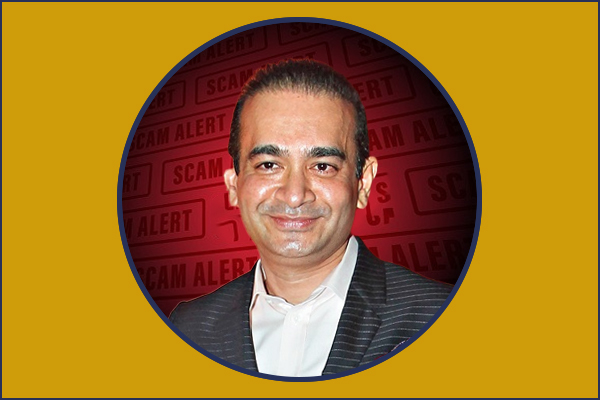
Nirav Modi is an Indian diamond jeweller who built a global luxury retail brand under Firestar International, with stores in cities including Mumbai, Delhi, New York, London, Hong Kong and Macau. In 2017, Forbes placed him among the world's billionaires on the strength of that business. He is now the central accused in what investigators describe as one of India's largest banking frauds — a case that also names his wife Ami Modi, brother Nehal Modi, sister Purvi Modi, and his uncle Mehul Choksi, promoter of Gitanjali Gems.
What Was the PNB–Nirav Modi Scam?
On 29 January 2018, Punjab National Bank told investigators it had found fraudulent LoUs worth ₹280.7 crore issued from a single foreign-exchange department at its Brady House branch in Mumbai. As auditors dug deeper, the figure grew fast — by mid-May 2018 the total had ballooned to roughly ₹14,357 crore (about $2 billion), making it one of the largest fraud cases ever uncovered at an Indian bank. The scheme relied on two PNB employees issuing LoUs to firms linked to Modi and Choksi — Diamond R US, Solar Exports and Stellar Diamonds — without collateral or an approved credit limit, letting the companies borrow short-term funds from the foreign branches of other Indian banks, including Allahabad Bank, Axis Bank and Union Bank of India.
How the Fraud Was Executed: The LoU–SWIFT Loophole
The fraud worked because the employees issued the LoUs through SWIFT, the international bank-messaging network, without recording them in PNB's core banking system. That meant the guarantees existed on paper to receiving banks abroad but never showed up on PNB's own books. Investigators say the first fraudulent LoU was issued on 10 March 2011, and more than 1,200 followed over the next roughly six years — an extraordinary run that depended on the same two officials handling the SWIFT terminal without independent reconciliation.

Why PNB Failed to Detect the Fraud for Years
The scam surfaced only when one of the two officials retired and his replacement, following standard procedure, asked the client firms for collateral before issuing further LoUs — something they had never been asked for before. When the firms pushed back, the bank examined the records and found the LoUs had never been logged internally. A parallel weakness was structural: PNB's SWIFT messaging system was not linked to its core banking software, so fraudulent instructions could be sent to overseas banks without appearing anywhere in PNB's internal ledgers.
Regulatory Aftermath: RBI Scraps the LoU Instrument
Within weeks of the scam becoming public, the Reserve Bank of India discontinued the issuance of Letters of Undertaking and Letters of Comfort for trade-credit imports with immediate effect, on 13 March 2018. Banks were told to rely instead on standard letters of credit and bank guarantees, which remain subject to tighter compliance checks. RBI also set up a committee under Y.H. Malegam to review divergences in bad-loan classification and fraud reporting across the banking system.
Nirav Modi's Legal Battle and 2026 Extradition Status
Nirav Modi was arrested by British police in central London in March 2019 and has remained in custody at HMP Wandsworth since, having lost repeated bail applications. He faces three separate sets of Indian proceedings: a CBI case over the PNB fraud itself, an Enforcement Directorate money-laundering case, and a second CBI case alleging he tried to tamper with evidence and intimidate witnesses. The UK's then Home Secretary approved his extradition in April 2021 after courts accepted India's assurances about his treatment in custody. Modi has continued to contest the decision — most recently arguing, citing a separate 2025 UK ruling on prison conditions in India, that he risked mistreatment if extradited. On 25 March 2026, the High Court of Justice in London rejected that bid to reopen his case, finding India's diplomatic assurances reliable and ruling there was no real risk of torture or ill-treatment. As of mid-2026, Modi remains in UK custody while his legal team weighs further options.
Mehul Choksi's Parallel Case in Belgium
Mehul Choksi, Modi's uncle and the promoter of Gitanjali Gems, also left India in January 2018. He later acquired citizenship of Antigua and Barbuda before relocating to Belgium for medical treatment. India's CBI tracked him there and filed a formal extradition request in August 2024; Belgian police arrested him in Antwerp on 11 April 2025. Choksi has argued he was unlawfully abducted from Antigua in 2021 and would face an unfair trial in India, but Belgium's Supreme Court rejected his appeal against detention in October 2025, and the Antwerp Court of Appeal advised the government to approve his extradition on six of seven charges on 3 April 2026. The final call now rests with Belgium's Interior Ministry, which has indicated a decision could take at least a month from that advisory ruling.
Impact on Indian Banking and Markets
News of the fraud hit bank stocks hard in February 2018: the combined market value of India's public-sector banks fell by more than ₹36,000 crore in the month, with PNB alone losing about ₹8,000 crore in investor wealth. Rating agencies responded quickly — CRISIL placed PNB's rating on watch, India Ratings downgraded its long-term issuer rating, and Moody's cut PNB's rating as well, before ratings gradually normalised in the following years. The case also renewed scrutiny of India's public-sector bank governance and internal-control standards more broadly.
Asset Recovery and Enforcement Action
The Enforcement Directorate has pursued Modi's and his associates' assets under the Fugitive Economic Offenders Act, 2018 — legislation introduced specifically to let courts confiscate the property of offenders who default on loans above ₹100 crore and remain outside Indian jurisdiction. Reporting through 2024 puts total confiscated assets linked to Modi and associates at around ₹692.90 crore, alongside earlier auctions of seized jewellery and luxury items. Separately, Choksi's Gitanjali Group assets worth over ₹2,565 crore have been cleared for auction by a Mumbai court as recovery proceedings continue.

Final Remarks
The Nirav Modi scam remains a defining case study in how a single unmonitored process — LoUs issued outside a bank's core system — can be exploited for years without detection. Eight years on, the case is still unresolved: Nirav Modi continues to contest extradition from the UK, Mehul Choksi's fate now depends on a decision by Belgium's Interior Ministry, and Indian investigators continue pursuing both prosecution and asset recovery in parallel.

DISCLAIMER: This blog is NOT any buy or sell recommendation. No investment or trading advice is given. The content is purely for educational and information purposes only. Always consult your eligible financial advisor for investment-related decisions.